For two months Orbit ran without a domain of its own. The web app answered at a Vercel address, the API at a Render address, and that was fine, because nobody but me was using it. What forced the question was not the URL. It was e-mail.
The e-mail that only reached me
The API sends four transactional e-mails: confirm your address, welcome, reset your password, create a password. They go out through Resend, and a Resend account without a verified domain can only send to the address that owns the account. Every other recipient gets a 422 back. So the confirmation e-mail worked perfectly in my inbox and for nobody else, and a confirmed e-mail is what unlocks the paid plan. The product had a door that only I could open.
Verifying a domain on Resend means owning one. The same domain would also give me a support address that is not my personal Gmail, and a business name on the Stripe checkout that says Orbit instead of my first name.
One domain, not one per project
The first instinct was to buy orbit.something. The second thought was that I
have more than one project, and I did not want to buy, renew and configure a
domain for each. So I bought one domain in my own name and gave each project a
subdomain under it. Orbit lives at orbit.byjuliocesa.dev. The next project
gets its own name at the same level, with no new purchase and no new DNS
account.
That choice carries into e-mail, which was the part I was not sure about.
Resend verifies a subdomain as if it were a domain: orbit.byjuliocesa.dev
has its own SPF and DKIM records, so the reputation of one project's mail
never touches another's. And receiving works the same way: Cloudflare's e-mail
routing forwards suporte@orbit.byjuliocesa.dev to my inbox for free, with no
mail server to run.
The cost is that the addresses are longer than suporte@orbit.app, and they
read like a developer's portfolio rather than a company. For a portfolio of
projects by one person, that is the honest description.
Three subdomains, three different records
The DNS lives on Cloudflare, and three records that look similar on paper turned out to need three different shapes.
The API was the easy one: api.orbit.byjuliocesa.dev is a CNAME to the Render
service. Render asks for that record, verifies it, issues a certificate, and
the old address keeps working alongside it.
The site was where I learned something. Vercel suggests a CNAME as well, and
Cloudflare refused to create it: a CNAME cannot share a name with any other
record, and orbit.byjuliocesa.dev already carried the MX records that make
the support address receive mail. Vercel showed "invalid configuration" until
I replaced the CNAME with an A record pointing at Vercel's address, which can
sit next to the MX records without complaint.
Mail took the most records and the least thought: Resend prints exactly what it
wants, one TXT for DKIM, one MX and one TXT for the return path, and a CNAME
for tracking. I created them through Cloudflare's API with a token that can
only edit that one zone, and Resend verified the domain in under a minute. Then
one line on Render, MAIL_FROM, and the confirmation e-mail started reaching
people who are not me.
Two records I added without being asked: DMARC on both the domain and the subdomain, and a BIMI record pointing at the Orbit mark. DMARC tells receiving servers what to do with mail that fails the checks, and having it makes the rest of the setup credible. BIMI is the record that puts a logo next to the sender. Yahoo and Fastmail honour it as is. Gmail and Apple Mail want a certificate that costs more than the whole project, so there the sender still shows an initial, and no DNS record changes that.
The part that falls asleep
Everything Orbit runs on is a free tier. Render hosts the API for free with one rule: after fifteen minutes without a request, the service is put to sleep, and the next request waits about twenty seconds while it wakes up. Supabase hosts the database for free with a different rule: a project that receives no query for seven days is paused, and someone has to press a button to bring it back.
Neither of those is a bug. They are the terms of not paying. But a personal finance app that takes twenty seconds to open, or a database that goes away over a quiet fortnight, is not usable by anyone but its author.
I did not want another service to watch the services. Cloudflare already had the DNS, and a Cloudflare Worker with a cron trigger is free too, so the keep-alive became a small program there. It runs two schedules. Every ten minutes it sends a request to a route on the API that does nothing but answer, which is enough to keep Render from sleeping. Once a night it runs one real query against each Supabase project, because Supabase only counts a query as activity, not a health check on the way in.
The detail I got wrong first was the alert. A worker that reports every failure would report every ten minutes while Render was down, which is the same as no alert. So it keeps the last known state of each target in Cloudflare's KV store and sends me a notification only when a target changes from ok to failing, or from failing back to ok. Two messages per incident, not sixty.
What it costs to keep a free thing awake
A service that never sleeps uses about 720 of the 750 hours Render gives a free workspace each month. That is the real price: one service, and no room for a second one on the same account. The cron on Cloudflare took over an hour to fire for the first time after the deploy, and I only know that because I sat and watched it. Since then it has run every ten minutes without a miss.
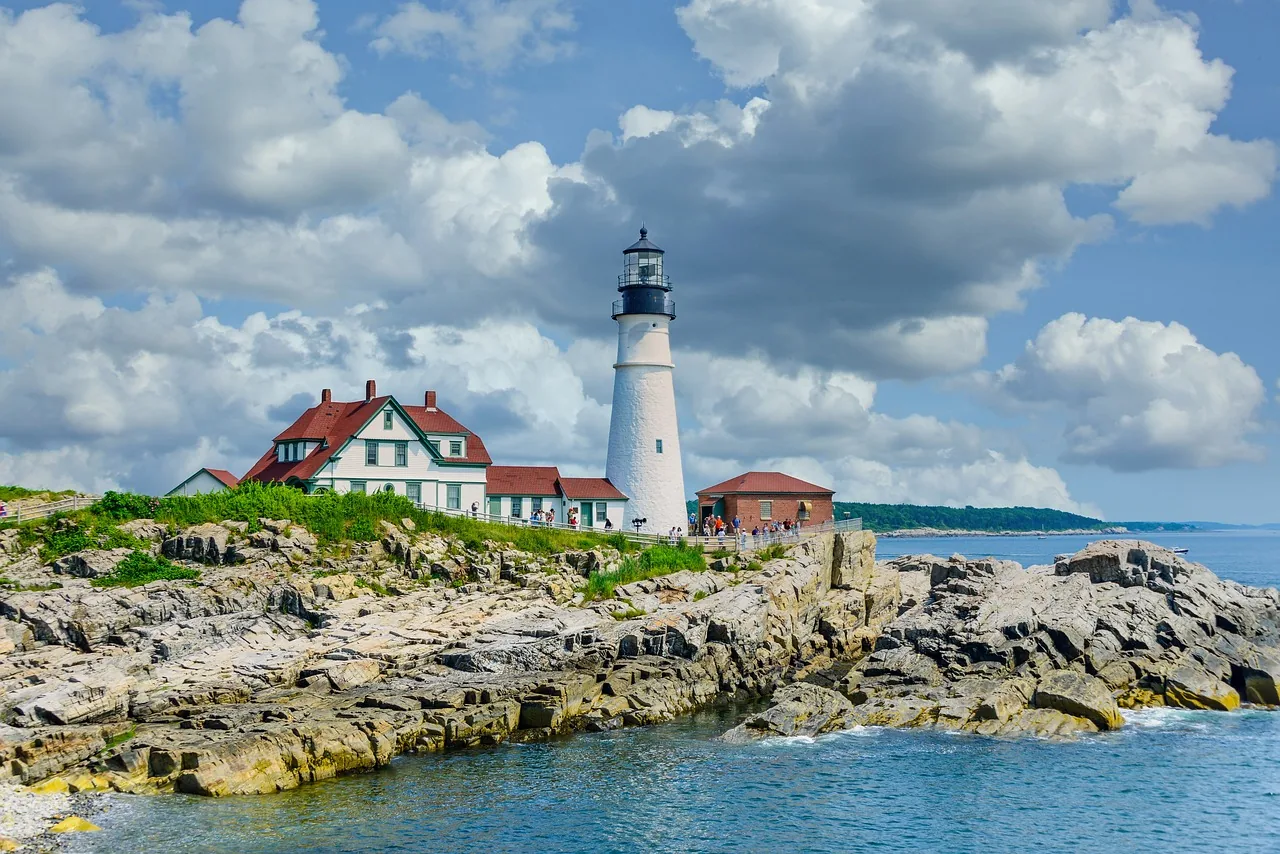
The lighthouse in the picture does one job. This worker does the same job, at a smaller scale, for a smaller sea.